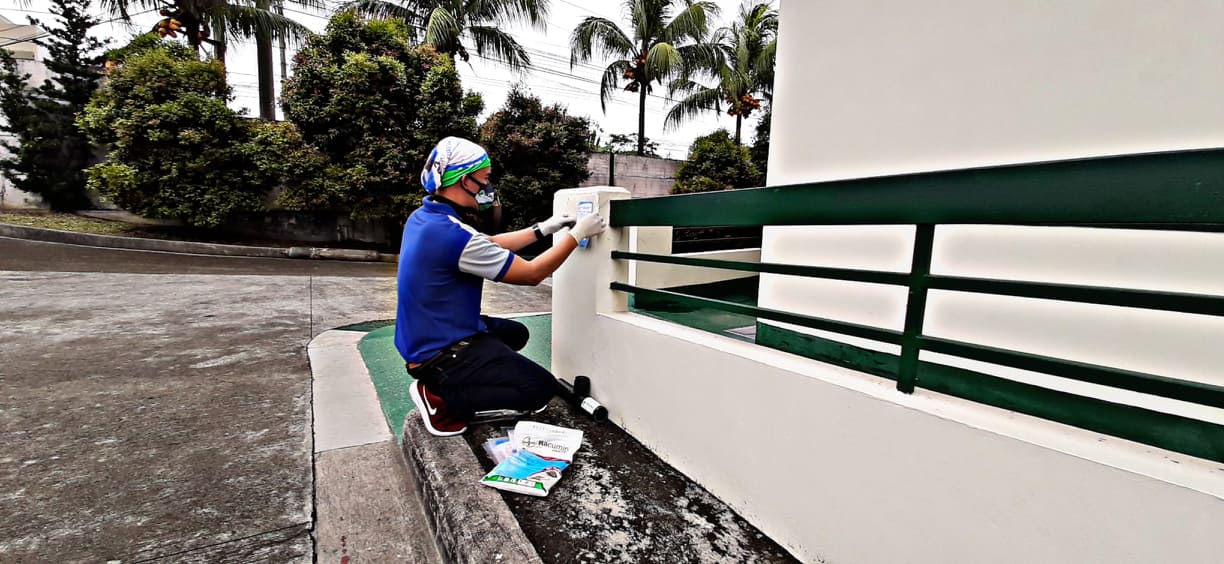

Episode 11 of BOAZ's entomologist series: why the first answer to a rodent problem is not a product, and why the right treatment always starts with the right diagnosis
When a site spots signs of rodents, the reflex is almost universal: buy bait, put it out, and hope the problem goes away. Entomologist April Musa-Marinay wants clients to pause before that reflex takes over. In professional pest management, she says, the first decision is never the product. It is the inspection.

The reflex most people have
April opens with a direct question: Kapag may rodent activity, paglalason ba agad yung sagot? When there is rodent activity, is poisoning the immediate answer?
For many households and businesses, the honest answer is yes. Maraming tao ang iniisip na kapag may daga, ang unang hakbang ay dapat maglagay na ng lason. Many people think that the moment they see a rat, the first step should be to put out poison.
It is an understandable instinct. Bait is easy to buy, easy to place, and it feels like action. But action is not the same as a solution. Bait placed without a diagnosis treats a symptom in one spot while the reasons behind the activity stay exactly where they were.

A product is not the first decision
April draws the line clearly: Pero sa professional pest management, hindi produkto ang unang desisyon. Inspection muna. In professional pest management, a product is not the first decision. Inspection comes first.
This is the difference between reacting and managing. A reaction starts with what is on the shelf. Management starts with what is happening on the site. The product still has a role, but it comes later, chosen for a specific purpose, in a specific place, based on what the inspection found.

What an inspection needs to answer
April spells out what that first step is for: Kailangan muna nating maintindihan kung saan nanggagaling yung rodent activity, bakit nangyayari to, at tsaka ano yung conditions na nagbibigay ng kakayahan sa rodent para magpatuloy. We first need to understand where the activity is coming from, why it is happening, and what conditions allow it to continue.
- Where is it coming from? Entry points, harborage, and travel routes. A gap under a door, a drainage line, a cluttered storage corner, or a neighboring property can all be the real source.
- Why is it happening? Something changed or something is attracting activity: a new delivery routine, a renovation, waste that sits too long, or the rainy season pushing animals indoors.
- What lets it continue? Food, water, and shelter. As long as those conditions remain, any treatment is fighting the site itself, and results fade as soon as the product runs out.


Clear diagnosis, accurate treatment
Then comes the point the whole episode builds toward: Kapag malinaw yung diagnosis, mas magiging tama rin yung treatment. When the diagnosis is clear, the treatment becomes more accurate too.
Accuracy matters in both directions. A clear diagnosis can mean less product, placed only where it is needed, which is safer for people, pets, and the environment. It can mean the most effective step is not a chemical at all, but sealing an entry point, adjusting storage, or tightening a sanitation schedule. And when treatment is needed, it is the right kind, in the right place, for the right reason.
For food plants and other regulated facilities, this is also what auditors expect. Standards such as GMP, HACCP, FSSC, BRC, and AIB look for documented inspection, risk assessment, and a rationale behind every control measure. "We put out bait" is not a rationale. "We found the source, corrected the condition, and placed controls where the risk is" is.


The right treatment starts with the right diagnosis
April closes in English, and it is the line worth remembering:
Remember that the right treatment starts with the right diagnosis.
It is the same discipline behind BOAZ's Plan-Do-Check-Act approach. Inspection is the "plan" that every other step depends on. Skip it, and even the best product becomes a guess.

The BOAZ take
Solutions Beyond Pest Control means starting every engagement by understanding the site before deciding what to apply. BOAZ technicians inspect, identify sources and conditions, and recommend the fixes that matter, whether the site is a family home, a restaurant, or an ISO-, GMP-, and HACCP-driven food plant.
Later in the series, April explains why monitoring is more valuable than guessing and what rodent signs are really telling you. Inspection is where both of those ideas begin.
Watch the Reel / talk to us
Facebook Reel (Episode 11): https://www.facebook.com/reel/1046217564877568
Book a free consultation with BOAZ Pest Control, including an on-site visit.
Metro Manila · Bicol
0922-865-5906 · (02) 7744-4068
sales.boazcorp@gmail.com
https://boazpestcontrol.com
Adapted from April Musa-Marinay's Episode 11 entomologist explainer for BOAZ Pest Control.