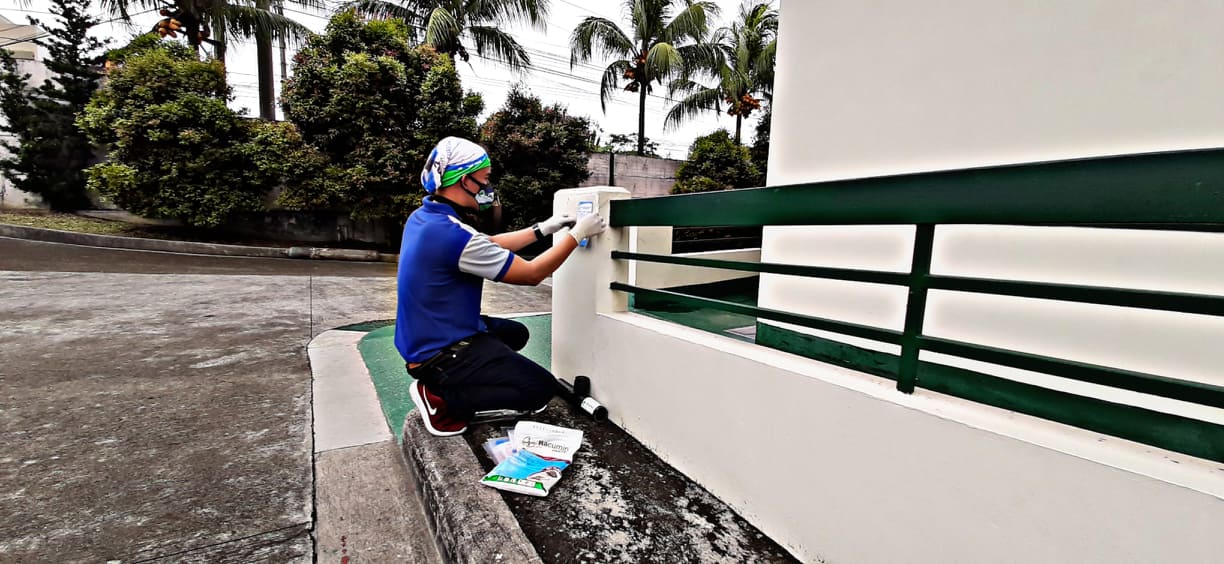

Episode 16 of BOAZ's entomologist series — why lasting results come from changing conditions, not repeating sprays
We all want a fast fix. Entomologist April Musa-Marinay hears that hope often enough to name it clearly: one treatment, then done.
In pest management, that hope is incomplete.

Why activity comes back
April opens with the question operators ask after a service call: Bakit bumabalik pa rin ang rodents kahit may treatment na nagawa?
Sometimes the expectation is simple. Minsan inaasahan natin na yung isang treatment ay kakapag-resolve na siya ng problem. One visit. One intervention. Problem closed.
But a single treatment does not rewrite the environment that invited activity in the first place.

What one treatment cannot change
April's corrective is practical, not dramatic: Pero hindi mababago ng isang treatment ang access, pagkain, tubig ng daga.
Access. Food. Water. Those are the conditions rodents use. Ito yung mga dahilan kung bakit sila bumabalik.
Treat the symptom without changing the conditions, and pressure has a path back. That is not a failure of effort — it is a diagnosis of the system. The Facebook caption for this episode says the same thing in plain Tagalog: we all want a quick solution, but lasting results in pest management are not won with one treatment alone.

Treatment is part of a program
April's framing is the episode's hinge:
Ang treatment bahagi siya ng programa — hindi siya ang buong programa.
Treatment matters. It is rarely the whole story. A program also watches entries and routes, reduces what sustains activity, monitors pressure, documents findings, and follows through. Integrated Pest Management in one sentence: intervene where needed, and redesign the conditions so the same pressure does not rebuild.

Changing conditions, not repeating treatments
April closes in English with the punchline:
Long-term results come from changing conditions, not just repeating treatments.
That is the opposite of fear-mongering. It is an operations line. Repeating the same treatment on the same open conditions can look busy and still leave the door ajar. Changing access, food, moisture, and shelter — with the right intervention matched to the diagnosis — is how quiet months become evidence, not luck.

What this means for operators and homeowners
If a site has been treated and activity returned, treat that return as information.
- Ask what still feeds the problem — access, food, water, shelter, process habits.
- Don't equate one visit with a finished program — treatment is a step, not the whole plan.
- Log where and when activity returns — patterns point to conditions.
- Pair intervention with exclusion and monitoring so pressure has fewer places to rebuild.
- Judge progress by conditions changed — not only by how often someone sprayed.
Lasting control is designed. It is not hoped into place.

The BOAZ take
Solutions Beyond Pest Control means treating the environment as part of the diagnosis. One treatment can reduce activity. A program changes what makes activity possible.
Pest-free is the new clean. And long-term results come from changing conditions — not just repeating treatments.
Watch the Reel / talk to us
Facebook Reel (Episode 16): https://www.facebook.com/reel/2107809173179211
Book a free consultation with BOAZ Pest Control.
Metro Manila · Bicol
0922-865-5906 · (02) 7744-4068
sales.boazcorp@gmail.com
https://boazpestcontrol.com
Adapted from April Musa-Marinay's Episode 16 entomologist explainer for BOAZ Pest Control.