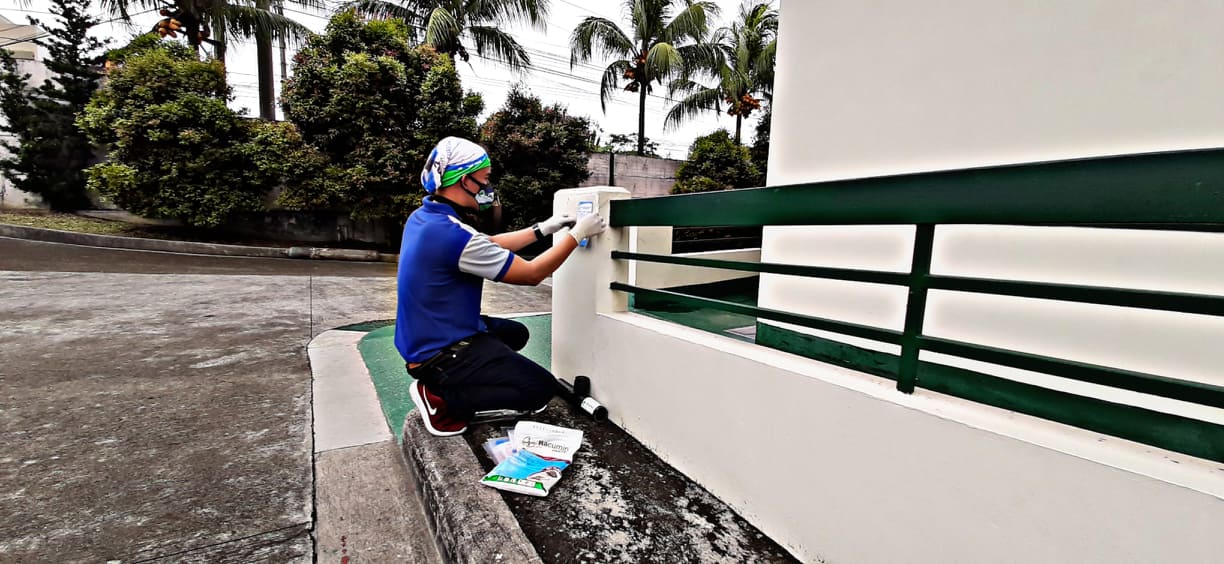

Episode 18 of BOAZ's entomologist series — why the cheapest intervention is usually the earliest one
There's a pattern entomologist April Musa-Marinay sees often enough to name it clearly: activity starts small, then gets deferred. Not because people don't care — because a "maliit na infestation" still feels manageable. So it waits.
Then waiting does what waiting always does.
Why problems grow before they get fixed
April puts the question up front: Bakit lumalala muna ang infestation bago ito naaayos?
The honest answer is ordinary, not dramatic. When early signs appear, they're easy to postpone. A quiet entry point. A few droppings. A single sighting that doesn't feel like a crisis. Minsan nakakalimutan natin itong kontrolin.
But delay is not free. While you wait:
- rodents (or other pests) can multiply
- the area of activity can widen
- operational risk can rise — for a kitchen, warehouse, clinic, office, or home
That is the hidden cost. Not a scare line. A systems line. Time compounds the problem the environment already made possible.

The cheapest intervention is usually the earliest
April's practical punchline lands without panic: Ang pinakamurang intervention ay madalas yun yung pinakamaaga.
Early action is cheaper not because it's a discount — because the work is smaller. Exclusion is simpler before routes are well used. Monitoring teaches more when pressure is still light. Targeted treatment stays targeted. Documentation stays clean. Follow-ups stay short.
Once activity is established, you're no longer solving a small problem. You're managing a wider one — more labor, more disruption, more recovery time.

Small problems are easier than established ones
Her closing reminder is the whole episode in one sentence:
Remember that small problems are easier to solve than established infestations.
That is Integrated Pest Management in plain Filipino-English: catch conditions early, act while the footprint is still narrow, and treat delay as a cost — not a neutral pause.
It is also why BOAZ frames pest management as partnership, not panic. We don't just remove pests. We help clients understand why activity happens, how to prevent it, and what to do next — ideally before "small" becomes "established."

What this means for operators and homeowners
If you've noticed early signs and been tempted to wait "one more week," treat that pause as a decision with a price.
- Log what you saw — where, when, how often.
- Don't dismiss a "small" finding — early evidence is useful evidence.
- Ask what sustains it — access, food, moisture, shelter, process habits.
- Act while the footprint is still narrow — inspection, monitoring, exclusion, and the right intervention matched to the diagnosis.
- Prove progress with follow-through, not hope.
Early action is not alarmism. It's good operations.

The BOAZ take
Solutions Beyond Pest Control means seeing time as part of the diagnosis. Waiting can be the most expensive choice — even when it feels like the calm one.
Pest-free is the new clean. And the earliest intervention is often the one that protects performance the most.
Watch the Reel / talk to us
Facebook Reel (Episode 18): https://www.facebook.com/reel/1538858734219333
Book a free consultation with BOAZ Pest Control.
Metro Manila · Bicol
0922-865-5906 · (02) 7744-4068
sales.boazcorp@gmail.com
https://boazpestcontrol.com
Adapted from April Musa-Marinay's Episode 18 entomologist explainer for BOAZ Pest Control.