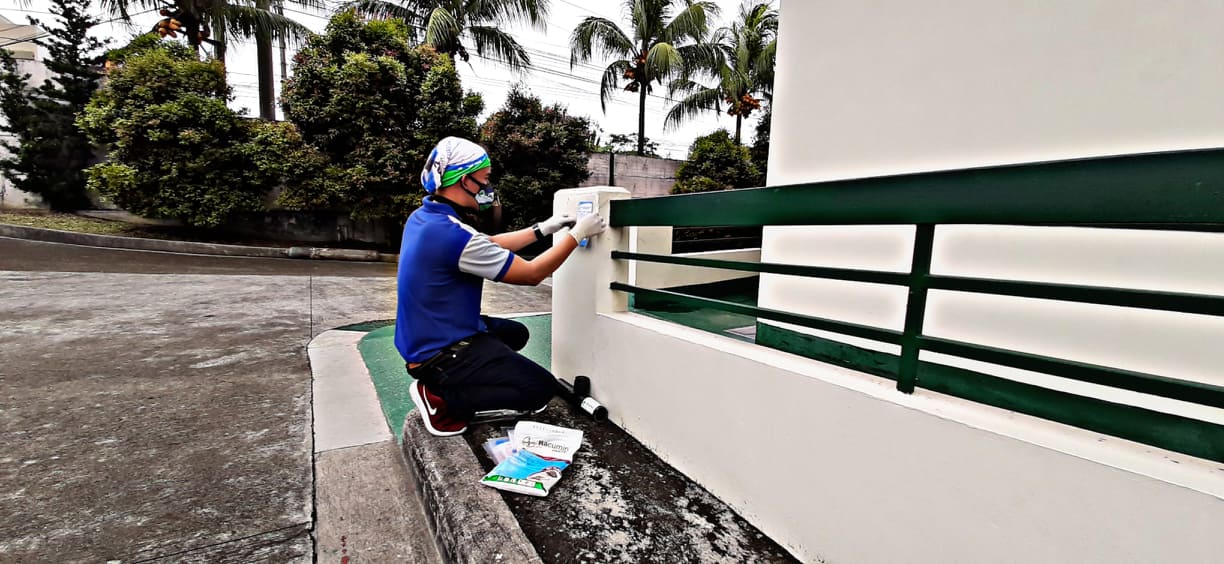


 Why sanitation alone doesn't end pest activity — and what smart operators do instead
Walk into a commercial kitchen at 6 a.m. and you'll often see the same ritual: counters wiped, floors mopped, trash bagged, stainless steel gleaming. The team did everything "right." Then, two nights later, activity shows up again near a drain, a door sweep, or a dry-goods shelf.
Managers ask the same question every time: If we're this clean, why is this still happening?
The uncomfortable answer is also the useful one: cleanliness matters — but pests don't only respond to mess. They respond to opportunity.
The clean-kitchen paradox
Sanitation removes food residue. That helps. But pest pressure in homes and businesses is usually a systems problem, not a scrubbing problem.
In facilities across Metro Manila — restaurants, offices, warehouses, schools — the same pattern repeats. Strong cleaning protocols. Recurring activity. Frustrated teams. Another round of spraying. Temporary quiet. Then the cycle starts again.
That's not a failure of effort. It's a gap in diagnosis.
At BOAZ, we put it this way: pests are symptoms, not the whole problem. Environment, behavior, and structure together create the conditions that keep activity alive.
What "clean" doesn't cover
A spotless surface can still sit next to:
- A door that doesn't seal fully after deliveries
- Warm equipment cavities that stay attractive overnight
- Floor-wall junctions and utility penetrations that create harborage
- Moisture around sinks, mop sinks, and condensation lines
- Stored product packaging that looks fine until you inspect the seams
None of those are fixed by another pass with a rag. They're fixed by seeing the whole operation — then choosing interventions that match the risk.
Investigation before intervention
The best pest managers don't begin with treatment. They begin with better questions.
- Where does activity concentrate — and when?
- What sustains it: food, water, warmth, access, shelter?
- Which conditions changed recently (menu, staffing, renovation, rainy season, new suppliers)?
- What would "proof of control" look like in two weeks — not just "we sprayed"?
That shift — from panic to process — is the heart of Solutions Beyond Pest Control. It's also why one treatment is rarely enough when the drivers remain untouched.
A calmer way to manage risk
If you're dealing with recurring kitchen activity, try this sequence before you escalate:
- Map the hotspots. Note time of day, location, and what was happening nearby.
- Separate sanitation gaps from structural gaps. Both matter; they need different owners.
- Tighten access and moisture first. Small seals and dry-downs often outperform another chemical cycle.
- Monitor instead of guessing. Tracking beats hope.
- Bring in a consultative partner when patterns persist — someone who will explain findings clearly, without finger-pointing.
Pest issues aren't a moral failing. They're a signal that it's time for a smarter, more sustainable approach.
The BOAZ take
We don't just remove pests. We help clients understand why activity happens, how to prevent it, and what to do next — with science-based, entomologist-led guidance, ISO 9001 discipline, and FDA-licensed practice.
Pest-free is the new clean. Cleanliness is the baseline. Risk management is the upgrade.
Ready for a clearer picture of your space?
Book a free consultation with BOAZ Pest Control.
Metro Manila · Bicol
0922-865-5906 · (02) 7744-4068
sales.boazcorp@gmail.com
https://boazpestcontrol.com
Educational content from BOAZ Pest Control. We speak like a consultant explaining a problem — not a vendor selling panic.